





Welcome to StopQueerDeportations

When return is not a safe return

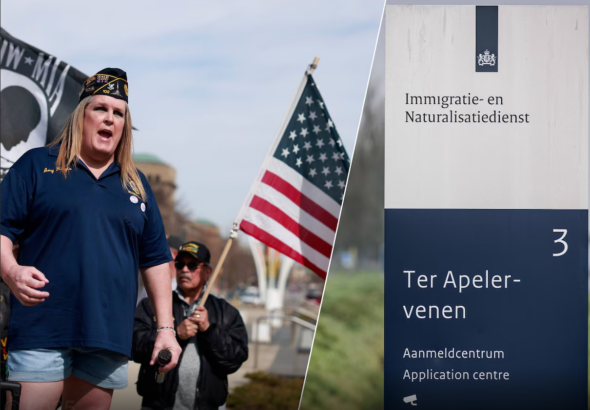
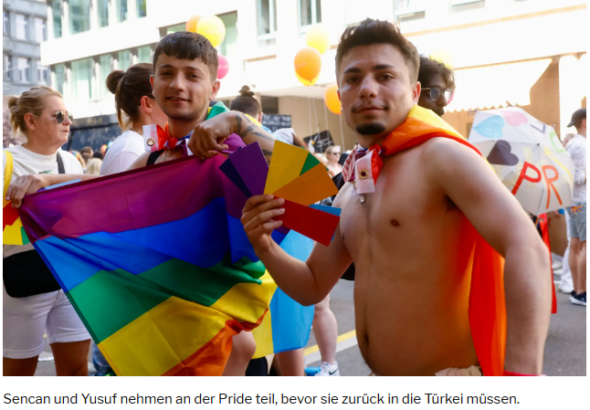
StopQueerDeportations works to protect the safety and rights of LGBTQIA+ people who face return or deportation to a country where they may not be able to live safely because of their sexual orientation, gender identity or gender expression.

Because a country that appears safe on paper is not automatically safe for everyone.

Laws may offer protection while the reality can still involve discrimination, exclusion, threats, violence or persecution. For an LGBTQIA+ refugee or asylum seeker, the question of whether a country is safe therefore cannot be answered by looking at laws or policies alone.

It comes down to something far more fundamental:

Can someone truly live there freely and safely as themselves?

StopQueerDeportations wants to make that reality visible. We draw attention to the human consequences of return and deportation, give people and their stories a voice, and work to ensure that personal safety and individual circumstances are not overlooked.

Deportation should never mean that someone has to live in fear again because of who they are or whom they love.

[Learn more about StopQueerDeportations →]

How safe is Europe for LGBTQIA+ people?

The situation for LGBTQIA+ people varies considerably from country to country. The ILGA-Europe Rainbow Map compares 49 European countries based on their laws and policies affecting LGBTQIA+ people.

The map provides insight into areas including equality and non-discrimination, family, hate crime and hate speech, legal gender recognition, bodily integrity, civil society space and asylum.

Select a country for more information or use Compare to compare countries directly.

Select up to 3 countries and compare all available data.

OVERALL SCORE

All mapped countries

0%
100%

INFORMATION

About the Rainbow Map

The ILGA-Europe Rainbow Map annually assesses and ranks 49 European countries on the basis of laws and policies that directly affect the human rights of LGBTI people. Countries are scored on a scale from 0%, representing severe violations of human rights and discrimination, to 100%, representing full equality and respect for human rights.

The assessment covers seven key areas: equality and non-discrimination; family; hate crime and hate speech; legal gender recognition; intersex bodily integrity; civil society space; and asylum.

The interactive Rainbow Map Explorer provided on this website uses the publicly available Rainbow Map dataset published by ILGA-Europe. It enables visitors to explore the available data by country and category, examine individual criteria, and compare countries in an accessible and interactive format.

It is important to understand what the Rainbow Map scores represent. They measure the extent to which a country’s laws and policies protect the rights and equality of LGBTI people. A country’s score should therefore not be interpreted as an assessment of the personal safety of an individual LGBTI person, nor does a higher score necessarily mean that discrimination, violence or persecution do not occur in practice.

For a broader understanding of the situation in individual countries, the Rainbow Map should be considered alongside ILGA-Europe’s Annual Review of the Human Rights Situation of LGBTI People in Europe and Central Asia. While the Rainbow Map provides a quantitative benchmark of legislative and policy developments, the Annual Review provides qualitative context about developments and lived realities in each country.

Data source and attribution: The underlying Rainbow Map data is collected, assessed and published by ILGA-Europe. Stichting Queer Sanctuary Foundation is not the original collector, verifier, processor or recipient of this underlying data. This website provides an independent interactive presentation of the publicly available dataset and does not claim ownership of, or alter, the original source data.

For the methodology, criteria, original Rainbow Map and further information about ILGA-Europe, visit the official ILGA-Europe Rainbow Map website.

COMPARE

Compare countries

Click up to 3 countries. Click a selected country again to remove it.

Dataset Loading… Official source: ILGA-Europe Rainbow Map ↗

The Rainbow Map ranks European countries based on laws and policies affecting LGBTI people.

Stichting Queer Sanctuary Foundation is not the original collector, verifier, data processor or recipient of the underlying Rainbow Map data. This website only displays the publicly available dataset published by ILGA-Europe and does not alter the source data. Scores concern laws and policies and should not be interpreted as individual safety assessments.

But a map does not tell the whole story

A high score does not automatically mean that every LGBTQIA+ person is safe in a country. Laws and policies tell only part of the story.

The reality can be different.

Discrimination, social exclusion, threats and violence may still occur. Protection from authorities may be inadequate, and a person’s individual circumstances can vary greatly depending on their region, community or family.

For someone facing return, the question is therefore ultimately not only what is written on paper, but what happens when that person actually finds themselves back there.

When can a country truly be called safe if someone cannot live there freely and safely as themselves?

[Learn more about LGBTQIA+ rights, safety and return →]

Safety has no borders

Behind every asylum procedure, every case file and every decision is a human being.

StopQueerDeportations wants to make visible what a decision to return someone can mean for that person’s life. We want to raise awareness, bring people’s stories into view and contribute to a society in which the safety of LGBTQIA+ people is not assessed solely through borders, laws and statistics.

And we need you to be part of that.

Share our campaign. Speak up. Help make these stories visible.

Because when deportation puts someone’s freedom or safety at risk, we must not look away.

HUMAN RIGHTS HAVE NO BORDERS
QUEER LIVES MATTER!

#StopQueerDeportations. 🏳️‍🌈

An official campaign of Stichting Queer Sanctuary Foundation.

Our Message Is Powerful. Our Boundary Is Clear.

Our campaigns can be confrontational, hard-hitting and sometimes shocking. At times, that is necessary to draw attention to a reality that is far harsher still.

With StopQueerDeportations, we specifically seek to draw attention to the removal and deportation of LGBTQIA+ people to countries or situations where their safety, freedom or human dignity may be at risk.

Behind every procedure, every decision and every deportation is a human being. A person with a name, a life, a history and a future. The consequences of a decision made on paper can be life-changing for that person.

But there is one thing about which we have absolutely no doubt:

Violence, discrimination, threats, intimidation, hatred and incitement to any of these are an absolute NO-GO for us.

Without exception. Regardless of who they are directed against.

Even when we fundamentally disagree with policies, deportations, decisions, organisations or individuals.

Stichting Queer Sanctuary Foundation stands for safety, human dignity, equality and human rights. Guided by these values, we always act peacefully, respectfully and non-violently.

We do not tolerate violence, discrimination, threats, intimidation, hatred or incitement to any of these — regardless of who they are directed against. Not during our campaigns, not during protests or events, and not within any other activities organised by, on behalf of, or under the responsibility of our foundation.

For us, taking strong action never means taking violent action.

These principles apply to our foundation as a whole, to our board members and volunteers, and to everyone acting on behalf of our foundation or participating in activities organised by or under the responsibility of our foundation.

They apply to StopQueerDeportations, to our other campaigns and to all activities of Stichting Queer Sanctuary Foundation.

We may confront. We may be critical. We may speak out against injustice. We may oppose deportations that we believe put people in danger. And we may demand change.

But we never fight violence with violence.
Discrimination with discrimination.
Hatred with hatred.

We fight injustice, not people.

That is not just our message.
That is our boundary.

Read our full statement →